Guns #8

This is a completed version of Guns, another in a series based on John Adams statement of the Declaration of Independence made on July 2, 1776. The piece is scored for flutes, vibraphones, baritone guitars, marimbas, and finger pianos. The tuning is based on the following six note scales in the Adams-12 subset from 72-EDO.
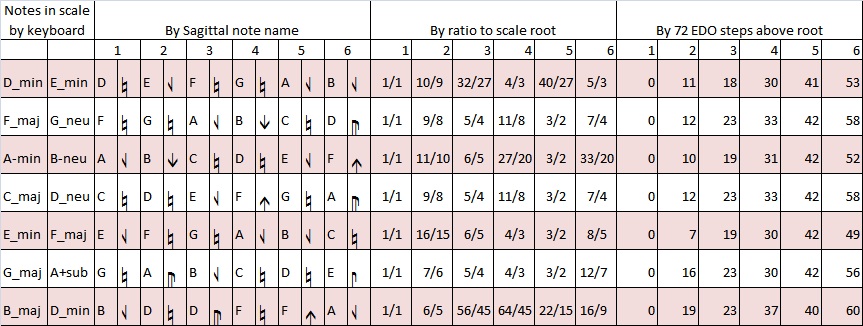
Scales
Scales used in Guns

The piece switches between the pink and the white scales, then after a while moves to the next pair of pink and white scales, eventually ending where it began. There is a melody that is repeated with many variations, including slides, tremolo, trills, and harmonizations. With only six notes at a time, this tends towards triadic harmony in the melody. The guitars and finger pianos on the other hand have their pitches chosen using the Markov Chain Drunkard’s Walk randomizing algorithm. They chose the next note in a chord by moving either one up or one down the following list of choices:

  • .one-A1 &pre-&n1..
  • .one-A4 &pre-&n4..
  • .one-A2 &pre-&n2..
  • .one-A5 &pre-&n5..
  • .one-A3 &pre-&n3..
  • .one-A6 &pre-&n6..

When I need an eight note chord, I pick eight of those, and what I get is probably related by how close the notes are to each other. For example, the randomizer might pick the 2nd element of the list, &pre-&n4.., which is the fourth note in the scale. It must pick next either the 1st or 3rd element, either &pre-&n1.. or &pre-&n2.., which are either the first or second in the scale. The next one picked is dependent on the prior choice, but it could go up or down the list of choices. There is a predominance of fourth chords using this scale layout. In my last piece, Sports, I built the list of choices based on a preponderance of thirds. Fourth chords using these odd scales have a clangy effect.

Your browser may not support the audio element.

Or download here: Guns.
Guns #6

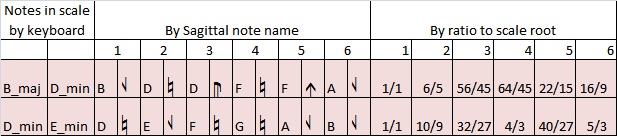
This is a work in progress. Today I worked on variations on the the melody. It still slowed down to half speed to make sure the trills and slide alternatives are accurate. I added the alternate key to the choices, now only either D_min and F_maj. The melody is played six times, first two straight versions, then two with variations and harmonizations, and the third with more changes still. I think it will make more sense when it’s faster. We’ll see.

Your browser may not support the audio element.

Or download here: Guns.
Guns #5

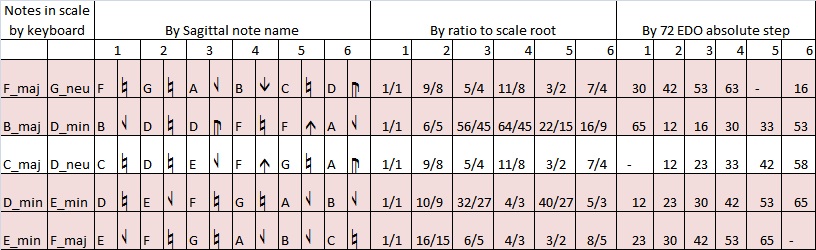
This is a work in progress. Today I worked on a melody. I slowed the piece down to half speed to make sure the trills and slide alternatives are accurate. So far so good. I haven’t included the other keys in this version. More to come.

Your browser may not support the audio element.

Or download here: Guns.

Guns #4

This is a work in progress. This one passes through two pairs of six note combinations of Adams-12.

  • D_min E_min plus F_maj G_neu
  • A_min B-neu plus C_maj D_neu
  • D_min E_min plus F_maj G_neu

Your browser may not support the audio element.

Or download here: Guns.

Guns #3

This is a work in progress. I added a measure that slides from one key to another. I hope to add a melody flute and vibraphone tomorrow, or something else perhaps.

Your browser may not support the audio element.

Or download here: Guns.

Guns #2

This is a work in progress. Today I made it more likely that silence would be chosen than yesterday’s sample. Still just guitars and finger pianos. I hope to add a melody flute and vibraphone tomorrow.

Your browser may not support the audio element.

Or download here: Guns.

Guns #1

This is a work in progress. Today I’ve started the next in the Adams series: Guns. Not sure where it’s going yet.

Your browser may not support the audio element.

Or download here: Guns.

Sports #7

This is a finished version of Sports. The piece is scored for English Horns, Alto Flutes, Baritone Guitars, Finger Pianos, Balloon Drums, and Tube Drums. The rhythm is a simple 12/8 in a 3 2 2 3 2 set. The tuning is my 12-Adams derived from 72-EDO. This tuning has twelve tones, to simplify keyboard playing, and I take six notes a time in each 12/8 measure, but quickly switch to an adjacent six note chord in the next measure and return to the previous in the next. For example, the beginning uses the following two six-note chords:
First two chords

The first six-note scale contains several notes that are in the second measure’s six note scale, like the notes in the D minor triad. But also in both chords are some very strange intervals, like the F to F+, at 3 72-EDO chords. The piece stays on those two chords for a while, then moves to other pairs of adjacent chords around the Adams twelve. Each measure uses only the six notes in one of the scales at a time. Here are all the ones used in the piece:

All chords

There is a melody that plays with varying degrees of variability. I move it up and down the scale, and add trills, slides, and tremolos so that each instrument has several choices for how to play. The choices are driven by the Markov Chain Drunkard’s Walk algorithm, in which the next choice is always either one up or one down from the previous one in the list of alternatives. The melody is composed, but the choice of which variation to play uses the Markov randomizing algorithm. That way, the two flutes, two English horns, and single guitar get five different cracks at the variation, and almost always chose a different one from their fellow melody maker.

Your browser may not support the audio element.

Or download here: Sports.

Sports #5

Still a work in progress. I added the ability of the melody to be played up or down a third from the original, slide around, tremolo, or played straight. I need to add the trill option. Tomorrow.

Your browser may not support the audio element.

Or download here: Sports.

Sports #4

This is a work in progress. Today I added flute and English horn melody and chords. I will add the melodic alternatives, with slides, trills, tremolo, and harmonization later.

Your browser may not support the audio element.

Or download here: Sports.